
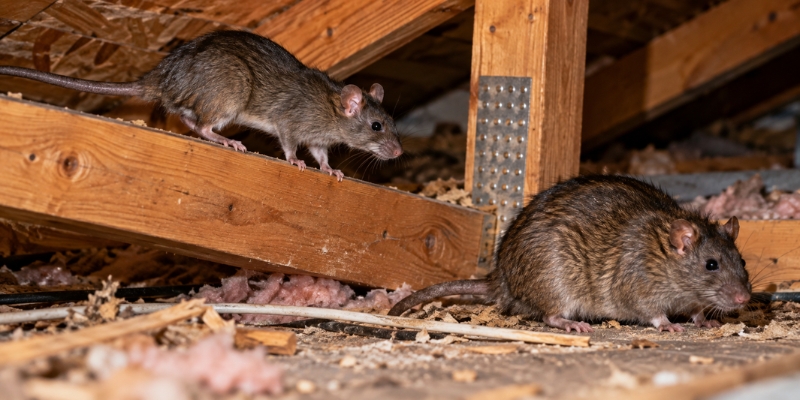
A rat in your Arroyo Grande attic may be a roof rat, but its location alone cannot confirm the species. Roof rats climb readily; Norway rats usually favor ground-level shelter, although they can reach upper spaces too. At The Pest Posse Too, we provide Arroyo Grande rodent control. We can compare the droppings, the animal's appearance, and its route into the house before recommending control and exclusion.
Compare the Rats Carefully
Roof rats tend to have a slender build, a pointed muzzle, relatively large ears, and a tail that is longer than the head and body combined. Norway rats are stockier, with a blunter muzzle, smaller ears relative to the head, and a shorter tail. Those details are easiest to judge from a clear photograph or a safe, distant observation. A quick glimpse in a dim attic can mislead you.
Droppings offer another clue. Roof rat droppings are generally narrower and pointed; Norway rat droppings are typically larger and blunt at the ends. Size varies with the animal, and old droppings can be hard to interpret. Photograph the signs with an object for scale without handling the waste. We compare several clues rather than relying on one pellet or one sound.
Follow the Route From Outside
Look at the building from the ground. Branches close to a roof, utility lines, fences, and adjoining structures can give a climbing rat access to an upper opening. Note damaged roof vents, loose trim, or gaps where different roof materials meet. Show us any gap you find. We can check for droppings or other signs before deciding whether the rat uses it.
Norway rats are often associated with lower areas such as ground-level voids and burrows. Check for openings near a foundation, under steps, or around exterior storage. A rat entering low may still travel upward through connected building spaces. The animal's likely species helps prioritize inspection locations, but the physical route must be established at the particular home.
Avoid climbing onto the roof or crawling into a cramped attic to confirm a guess. Insulation can conceal hazards and contamination, and a disturbed animal may retreat into an inaccessible space. Document what you can see safely, including the side of the home where sounds occur and the times you hear them.
Other Animals Can Make Attic Noises
Scratching and thumping above a ceiling can come from squirrels, mice, or other animals. Noise alone cannot tell you the species or how many are there. Daytime sounds, scattered nesting material, chewed wiring, and droppings all add context, but none replaces an inspection. If you actually see the animal, note the tail shape, body size, and color without approaching it.
The attic is also where damage can remain hidden. We may need to inspect insulation and stored items and look for visible gnaw damage near wiring. If you notice exposed or damaged electrical material, arrange appropriate electrical evaluation and avoid handling it. Keep pets and children away from any accessible droppings or nesting material.
Coordinate Control, Cleanup, and Exclusion
We use an integrated approach that considers the animal, its food and shelter, and its way into the building. Device placement and exclusion depend on the species and route. Closing an attic opening before dealing with animals inside can trap them in the structure or force a new route. Ventilation and drainage openings also require suitable materials rather than a solid plug.
Trim accessible vegetation away from the building when appropriate, secure pet food and stored goods, and manage fallen fruit or other food sources on the property. These steps may reduce attraction but cannot remove a rat already living in the attic. For droppings, avoid dry sweeping or vacuuming; seek qualified help for heavy contamination in insulation or enclosed spaces.
If we identify a roof rat, ask us which upper openings and climbing routes we found. If the signs suggest a Norway rat, ask which ground-level areas were checked and whether a connected path leads upward. Either answer should be based on actual evidence at the home. Keep a record of when noises stop and whether fresh droppings appear after accessible areas are cleaned. This can help separate progress from a temporary lull. If the attic contains stored boxes, avoid carrying contaminated material through living areas until you understand what cleanup is needed. The species identification should guide control and building work, not simply provide a label for the sound.
For an Arroyo Grande attic, we assess the species and entry route using the signs at the home rather than the sound alone. Contact The Pest Posse Too with the location and timing of the noises, and we can discuss a rodent inspection for your home.
