
The Pest Posse Too is a green, natural pest control company, which means our approach to German cockroaches looks a little different from what a lot of homeowners expect—less “carpet bomb the kitchen” and more “precision strike with a very small amount of bait.”
That doesn’t make other methods wrong—we simply prefer to use as little product as possible while still getting real, lasting control. Here’s what that looks like from start to finish, once identification is confirmed and you understand and agree to the plan.
Step One: HEPA Vacuum Knockdown
Rather than starting with a heavy liquid application, our initial treatment typically begins with thoroughly vacuuming up every cockroach we can see.
We use a HEPA-filtered vacuum specifically designed for insect control, so we’re not pushing insect particles and allergens back out into the air you breathe the way a standard shop vacuum would. It’s a clean, efficient way to remove a large portion of the visible population right from the first visit—and it lines up with our Gentle First value: using the least toxic solution first, before reaching for anything heavier.
This step alone often makes a noticeable difference by the time we walk out the door on day one. Fewer visible roaches, less material for the household to be exposed to, and a head start on the population before the baiting protocol even begins working.
Step Two: Targeted Crack-and-Crevice Baiting
After vacuuming, we move into a precise baiting protocol, placing small amounts of bait directly into the cracks and crevices where cockroaches are hiding—behind the refrigerator, behind the stove, inside a refrigerator’s motor compartment, under sinks in pipe chases, and sometimes behind light switch or outlet plates if we suspect cockroaches have access there.
The goal is to get bait as close to their harborage as possible, so you stop seeing them without needing a heavy application anywhere near your countertops, stove, or living spaces.
Bait typically takes a few days to start showing results, and we’ll let you know what kind of timeline to expect for your specific situation.
The Science Behind Secondary Kill
One of the reasons baiting is so effective is that it takes advantage of natural cockroach behavior. Younger nymphs especially prefer to stay hidden rather than forage, and they rely on feeding off the feces of older cockroaches that have been out eating.
When an adult feeds on bait and later leaves droppings, the active ingredient carries through to the nymphs that feed on that material—and the effect can carry through several generations from a single feeding event, reaching cockroaches that never touched the bait directly.
It’s a smart, low-risk way to reach the cockroaches you’ll never actually see, tucked deep in a harborage site behind a wall or appliance.
Insect Growth Regulators
Depending on the infestation, we often add an insect growth regulator to the protocol.
This is a lab-formulated hormone that disrupts normal development, effectively sterilizing young cockroaches—particularly females—as they mature. It also tends to stimulate feeding in females that are building an egg case, since egg production is energy-intensive and drives up their appetite, which means more of them end up exposed to the material.
When that happens, the effect can carry all the way into the ootheca itself, stopping the eggs inside from developing. This step targets the reproductive engine of the infestation directly, rather than just the visible population.
When We Use Dust Formulations
For heavier infestations, we may also use an insecticidal dust in voids and other concealed areas. Like our baiting approach, this stays strictly in cracks, crevices, and void spaces—never on open surfaces like countertops or stovetops.
Applied correctly, a light, even layer is far more effective than a heavy application; cockroaches will actually avoid a clumped or over-applied area, treating it as an obstacle rather than a hazard worth exploring.
Every method in our protocol is designed to be low-risk around your family and pets while still being highly effective against the target pest.
Low-Risk by Design
It’s worth repeating: every method in this protocol is applied in cracks, crevices, and voids—not sprayed across open living spaces.
That’s a deliberate choice, not a limitation. It means lower-risk exposure for your family and pets while still delivering the targeted, sustained control that gets ahead of a fast-breeding pest like the German cockroach.
Follow-Up Monitoring
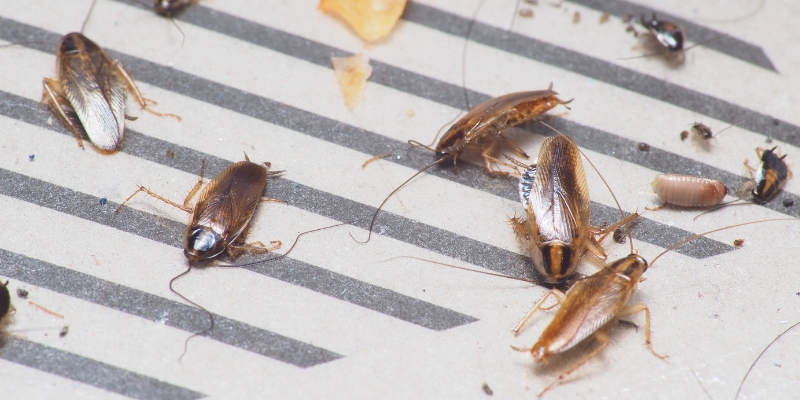
Once initial treatment is complete, we follow up using insect glue monitors, typically housed in protective enclosed boxes so pets, children, and anyone in the home can’t accidentally come into contact with them.
On each visit, we count what we’re catching—comparing nymphs to adults—and even note the direction cockroaches entered the trap, which can tell us whether something was missed in the original treatment or whether activity is shifting to a new area of the home.
If needed, we’ll refresh bait in key locations; even older bait placements have been known to keep working for up to a year after the original application.
This whole process is built around getting real, lasting control with the least amount of product necessary—not the fastest possible spray job and a quick exit.
Curious how long the process typically takes from here? Read How Long Does German Cockroach Control Take in Grover Beach?
Bringing you peace of mind, nature's way.
