
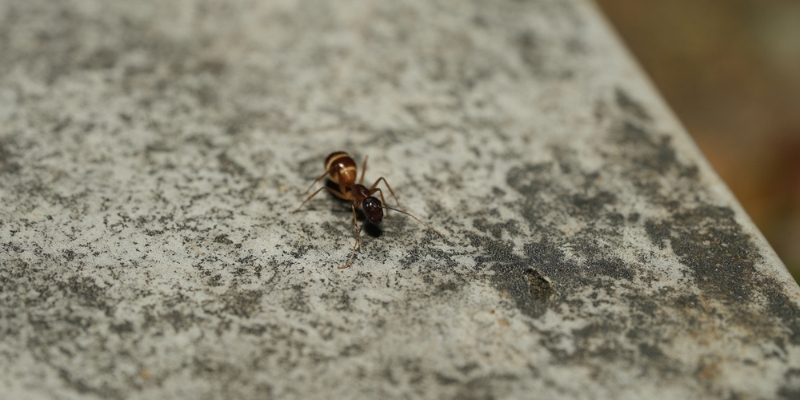
Ant problems are frequently treated like a pesticide problem—just spray and be done with it. And sometimes that's true. But green pest control starts long before a treatment is ever needed.
There are several cultural practices you can use around your home to help keep ant populations under control naturally. Let's walk through a few of them, along with some real experiences from the field that show just how much these small habits matter.
The Aphid Connection
Aphids—along with other piercing-sucking insects like mealybugs, scale, and whiteflies—secrete something called honeydew. Honeydew is the primary food source for many of our local ant species.
Ants will literally farm aphids like cattle: tending them, stroking them to encourage more honeydew production, keeping natural predators away, and even carrying aphids from one location to another so they can cultivate new "herds." As we move into summer, this becomes one of the best food supplies an ant colony can find.
Oak trees are a notorious offender here. California oaks provide fantastic shade, but they can be loaded with aphids without you ever noticing a problem. Because these trees are so large, all it takes is a modest aphid population scattered throughout the canopy—not even dripping honeydew onto the concrete below—to give an entire ant colony a feast.
A few natural, eco-conscious ways to keep aphids in check:
- Ladybugs: This is green pest control at its most classic—a natural predator doing the work instead of a chemical spray. Ladybugs are voracious eaters of aphids and other soft-bodied pests. The trick most people get wrong is releasing them during the day. Daytime releases usually result in them flying away. Instead, release them after the sun goes down so they'll crawl into the bushes, discover the food supply, and stick around—often for a couple of generations, cleaning up the aphid problem with no further work on your part.
- Hosing them off: A simple, zero-chemical option. Aphids come off easily, especially on smaller shrubs. (Not a practical option for an 80-foot oak, admittedly.)
- Pruning and smart fertilizing: Keep bushes pruned, and don't over-fertilize. A healthy fertilizing routine is good for your plants, but too much encourages fresh, tender new growth—exactly what aphids love most.
Moisture, Harborage, and the Unedged Lawn: Green Pest Control Basics
Ants—especially the species common in our area—nest in the ground and need moisture to survive. Drip-line irrigation is far better than overhead watering, which sends runoff onto concrete and sidewalks and keeps the cracks right next to them consistently moist. That's exactly the kind of environment ants need to raise their young.
Unedged lawns make this worse. When turf hangs over a sidewalk or driveway instead of being cut back cleanly, it creates a harborage area no treatment can reach—that thick grass blocks access to the crack right underneath it. Keeping your lawn edged isn't just about curb appeal (though it does make your yard look cleaner and more cared for).
Some of our local species, Argentine ants in particular, avoid trailing in direct sun, so a clean, exposed edge naturally discourages their movement. Cracked concrete and weedy areas create the same kind of hidden ant highway, so keeping weeds cleared out of cracks matters too. This is the heart of green pest control: small habits that make your yard naturally less inviting to ants in the first place.
Ivy on the Walls
Ivy growing on the wall of a home can look fantastic—but it also creates a perfect place for ants to live and a direct route into your house. (It also gives rodents an easy way to climb your walls, though that's a topic for a future post.)
I had a job recently at a small hotel in downtown Pismo, near the Shell Beach area. They were getting ants in the office and the main suite, and it was driving them crazy. I went out a couple of times and honestly couldn't identify the source. Then I looked at the front of the building — ivy everywhere. I started pulling it back and digging into it, and sure enough, there was a huge ant colony living right inside the ivy.
That was the whole problem. I placed ant bait directly inside the ivy where the ants could access it, and I haven't heard back from them since—hopefully because the ants are gone for good.
If you want ants under control, keep ivy off your structure, or make sure it's treated appropriately if you're not ready to remove it.
Ivy on the Fence (and Other Structures)
Fences, retaining walls, and brick walls create the same problem as ivy on a house—great places for ants to build up away from the home itself. But once a colony gets large enough, which happens easily in our moist summer conditions, you can end up with a massive colony that seems to have no obvious source. In reality, it could be 50 or 100 feet away, tracing back to ivy on a wall or fence line.
Putting It Together: Green Pest Control You Can Start Today
These cultural practices—aphid control, smart irrigation, clean edging, and keeping ivy off structures—are some of the best ways to keep your yard free of ants naturally, perhaps even enough that you won't need professional treatment as often.
These are exactly the things we check for on every service call: whether ants are farming aphids in your trees, trailing along your fence line, working the edges of your concrete, or nesting in ivy against your home. Cultural practices, done consistently, are the foundation of effective green pest control and can keep your yard more pest-free than you ever thought possible.
As always, The Pest Posse Too is bringing you peace of mind, nature's way.