
Spiders are a regular presence in homes across Pismo Beach, and while most species are harmless, their sudden appearance can be unsettling. Identifying the types of spiders you’re most likely to encounter—and understanding their behaviors—allows you to manage them effectively without disrupting the balance of the local ecosystem.
The Web‑Builders: Cellar Spiders
Cellar spiders are among the most recognizable household spiders due to their extremely long, thin legs and small bodies. They thrive in damp, dark areas and are often mistaken for being dangerous, though they pose no threat to humans.
- Preferred habitats: Basements, garages, crawl spaces, and ceiling corners
- Web style: Loose, irregular webs that can spread quickly if not cleaned
- Diet: Small insects, mosquitoes, and even other spiders
- Behavior: Shake their webs when disturbed, possibly to confuse predators
- Risk level: Harmless to humans, but webs can accumulate and make spaces look neglected
Cellar spiders are more of a nuisance than a danger. Their webs can multiply quickly, giving the impression of an infestation even when only a few spiders are present. Regular cleaning and sealing entry points are usually enough to keep them under control.
The Corner Dwellers: House Spiders
These small brown spiders are the ones most often spotted indoors. They’re not aggressive and rarely leave their webs once established, but their presence can become noticeable over time.
- Preferred habitats: Ceilings, window frames, and quiet corners
- Web style: Sticky webs designed to trap flies and other household insects
- Diet: Flies, gnats, and other small pests attracted to indoor light
- Behavior: Can remain in the same web for months if food is available
- Risk level: Harmless, but webs accumulate and may require regular cleaning
House spiders are a sign that insects are finding their way indoors. By reducing indoor insect activity—for example, keeping windows screened and food sealed—you naturally discourage house spiders from settling in.
The Architects: Orb Weavers
Orb weavers are admired for their intricate circular webs, which can appear overnight in outdoor spaces. While they’re beneficial outdoors, they occasionally wander inside.
- Preferred habitats: Porches, patios, gardens, and areas near outdoor lighting
- Web style: Large, symmetrical webs rebuilt daily, often at night
- Diet: Flying insects such as moths, mosquitoes, and beetles
- Behavior: Non-aggressive, retreat to the edge of their web when disturbed
- Risk level: Harmless to humans, but webs can block walkways or entry points
Orb weavers are excellent natural pest controllers outdoors, but their webs can be inconvenient when built near entryways. Relocating them gently or discouraging insects with reduced lighting can help minimize encounters.
The Hunters: Wolf Spiders
Wolf spiders are robust hunters that rely on speed rather than webs. Their size and speed can be startling, but they’re not aggressive toward humans.
- Preferred habitats: Gardens, lawns, and occasionally indoors while hunting
- Web style: Do not spin webs; instead, they roam freely in search of prey
- Diet: Crickets, beetles, and other ground‑dwelling insects
- Behavior: Carry egg sacs attached to their bodies; mothers carry spiderlings after hatching
- Risk level: Not dangerous, but their large size often causes alarm indoors
Wolf spiders are beneficial outdoors, but when they wander inside, their size can be intimidating. Keeping doors sealed and reducing clutter near foundations helps prevent accidental entry.
The Cautionary Ones: Black Widows
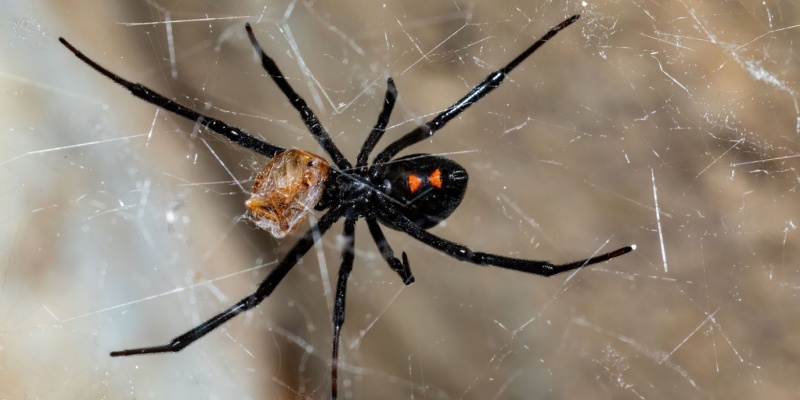
Black widows are one of the few medically significant spiders in California. Their glossy black bodies and red hourglass marking make them easy to identify.
- Preferred habitats: Garages, sheds, woodpiles, and outdoor storage areas
- Web style: Irregular webs built close to the ground or in cluttered spaces
- Diet: Beetles, flies, and other insects caught in their sticky webs
- Behavior: Shy by nature, but females deliver venomous bites if threatened
- Risk level: Potentially dangerous; caution is essential when disturbing their habitat
Black widows require careful management. If you suspect their presence, avoid handling clutter directly and consider professional pest control to ensure safe removal.
The Curious Jumpers: Jumping Spiders
Jumping spiders are small but fascinating. Their compact bodies and large front eyes give them excellent vision, and they actively hunt rather than relying on webs.
- Preferred habitats: Windowsills, walls, and sunny indoor areas
- Web style: Do not build webs for hunting; instead, use silk for safety lines when jumping
- Diet: Flies, mosquitoes, and other small insects
- Behavior: Curious, often turn to watch movement; leap short distances to catch prey
- Risk level: Harmless to humans and considered beneficial, though their sudden movements can surprise homeowners
Jumping spiders are among the most beneficial species to have around, as they actively reduce insect populations. Their presence indoors is usually accidental, and they can be gently relocated outside.
The Look-Alikes: Brown Widow Spiders
Brown widow spiders resemble their black widow relatives but are less dangerous. They share the same distinctive body shape but have lighter coloring, often gray or brown, with an orange or yellow hourglass marking instead of red.
- Preferred habitats: Outdoor furniture, mailboxes, fences, and sheltered corners
- Web style: Irregular webs similar to black widows, often built in man-made structures
- Diet: Small insects trapped in their sticky webs
- Behavior: Shy and reclusive, rarely aggressive toward humans
- Risk level: Venom is less potent than black widows, but bites can still cause discomfort
Brown widows are often overlooked because of their resemblance to black widows. While less dangerous, they should still be approached with caution. Identifying them correctly helps homeowners avoid unnecessary alarm while still practicing safe management.
The Ground Runners: Funnel Weaver/Grass Spiders
Funnel weavers, also called grass spiders, are fast‑moving hunters that build sheet‑like webs with a funnel retreat. They’re common in grassy areas and sometimes wander indoors.
- Preferred habitats: Lawns, gardens, and occasionally basements or ground-level rooms
- Web style: Flat, sheet‑like webs with a funnel entrance where the spider hides
- Diet: Flying and crawling insects that land on their webs
- Behavior: Dash quickly into the funnel when disturbed; rely on speed rather than venom
- Risk level: Not harmful to humans, but webs can accumulate in outdoor spaces
Funnel weavers are beneficial outdoors, helping reduce insect populations in lawns and gardens. Indoors, their webs can be unsightly, but they pose no real threat. Regular yard maintenance and sealing entry points keep them where they belong—outside.
Safe Ways to Manage Spider Problems
Spiders play a vital role in controlling insect populations, but most homeowners prefer to limit their presence indoors. Practical steps include sealing cracks, reducing clutter, cleaning corners regularly, and moving firewood away from the home. Eco‑friendly pest control treatments are also effective for managing infestations without harming pets or the environment.
Each spider species behaves differently—cellar spiders thrive in damp corners, orb weavers construct large webs outdoors, wolf spiders roam freely without webs, and funnel weavers build sheet-like traps in grassy areas. Because of these varied habits, effective management requires more than general cleaning. A tailored approach ensures that the right strategies are applied to the right species, keeping your home comfortable while preserving the ecological balance that spiders contribute to.
At The Pest Posse Too, we specialize in helping Pismo Beach homeowners manage spider problems with safe, eco‑conscious solutions. Our licensed team focuses on prevention and tailored treatments that protect your family, pets, and property while respecting the environment. Whether you’re dealing with cellar spiders in the corners or black widows near the garage, we’re here to bring you peace of mind, nature’s way—contact us today to schedule your service.